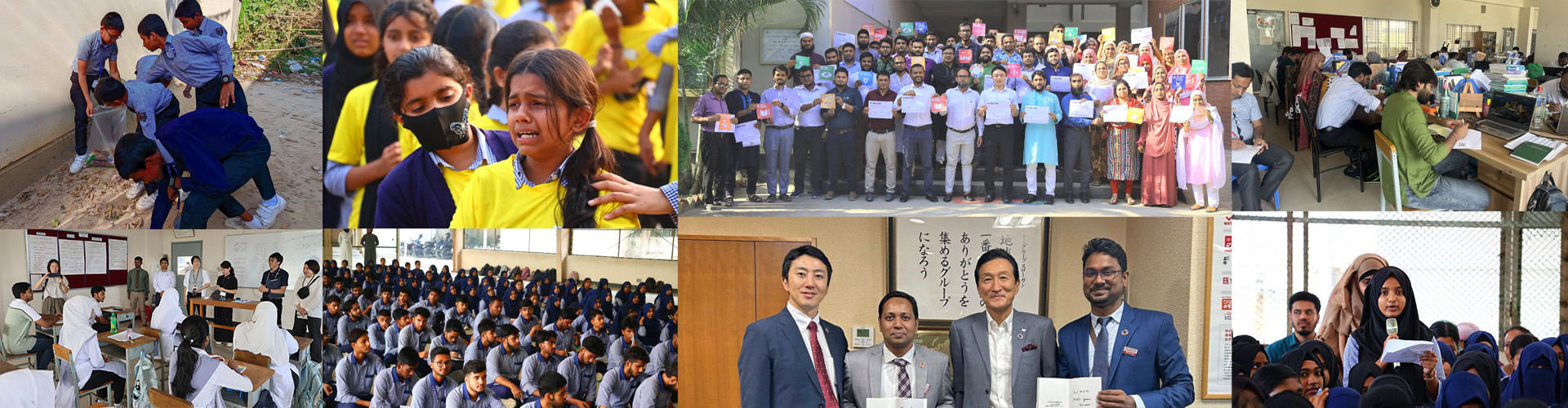
Both institutions were established through collaborative efforts involving Japanese educational leadership. Narayankul Dream Model School & College (NDMSC) was founded in 2013 through a partnership involving Basic Development Partners (BDP), Public Interest Incorporated Foundation School Aid Japan (SAJ), and the Ikubunkan Institute of Education in Tokyo, Japan. Japan International Dream School & College (JIDSC) was subsequently established in 2017, also following an innovative Japanese educational model in collaboration with the Ikubunkan Institute of Education.
The institutions share a common visionary leader, Miki Watanabe, who serves as the founder of both NDMSC and the founder of the "Watami" group, a business that spans food service, nursing, agriculture, and environment industries in Japan. Mr. Watanabe is also the Chairman of Ikubunkan Gakuen (a high school in Tokyo) and chairs the Public Interest Incorporated Foundation School Aid Japan, which provides educational support to children in countries including Bangladesh, Cambodia, and Nepal. His personal belief is that the achievement of "thank you" is the utmost happiness of human beings, and he wishes for NDMSC to be the center point of a dream where the world is united and "overflowed with the smiles of joy"
At the heart of both schools is the philosophy of "Dream Education," which aims to develop individuals who can think and behave independently. This transformative vision rests on three interwoven pillars: Humanity, Scholastic Ability, and Globalization.
1. Humanity: This is considered the foundation, stressing that true success requires strong moral values and good character. Students are cultivated with qualities such as empathy, kindness, honesty, and respect, with the core teaching that a warm heart is just as important as a sharp mind.
2. Scholastic Ability: While dedicated to academic excellence, this pillar emphasizes critical thinking, curiosity, and the utilization of knowledge rather than mere memorization. The goal is to raise well-rounded individuals who are intellectually capable but also morally grounded, believing that academic brilliance is incomplete without ethics or empathy.
3. Globalization: Students are prepared for an interconnected world by nurturing an appreciation for global cultures. This is notably achieved through real international relationships, such as the partnership with Ikubunkan High School in Tokyo, facilitating cultural exchange programs and direct interaction with students from a different part of the world.
The institutions employ management styles heavily influenced by Japanese practices. At Narayankul Dream Model School & College, the Principal and Vice Principal sit together with all the teachers in one room, a characteristic of Japanese Management. Both institutions are currently led by Principal Katsushi Furusawa.
Additionally, both schools utilize Eight Strategic Projects (including Academic Development, Dream Project, and Human Resource Project) for comprehensive management, with teachers and leaders working together to implement new strategies and innovations. Daily collective morning meetings are held to share important updates and start the day with motivation.
The schools exist solely for the welfare and happiness of their students, focusing on helping them pursue and accomplish their dreams.
Core Dream Programs in Japanese School in Bangladesh:
To cultivate responsible and capable individuals, JIDSC students adhere to seven core promises. These promises, also adopted by NDMSC, focus on: greeting people cheerfully, being truthful, showing gratitude for what they have, making consistent efforts toward dreams, judging based on right and wrong (not pros and cons), sharing happiness and sadness, and achieving goals they truly believe in.
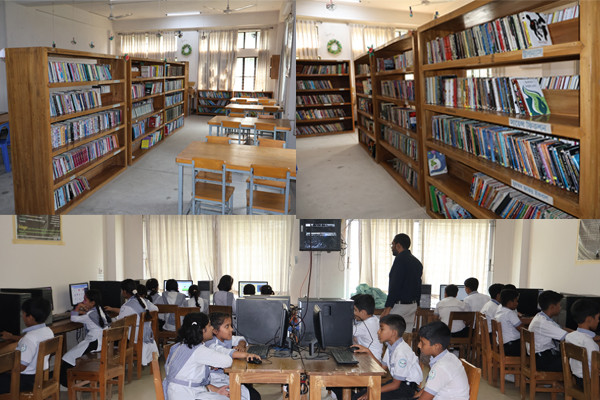
The learning environment is supported by extensive, modern facilities. NDMSC, situated on 2.14 acres in Gazipur, features a five-story building, a large playground, and a modern hostel. JIDSC similarly provides a five-storied building, a large playground, and an indoor arena.
The schools prioritize advanced learning tools:
The schools actively prepare students for global engagement.
The educational model strongly emphasizes global standards, particularly the United Nations Sustainable Development Goal 4 (SDG4), which seeks to ensure inclusive and equitable quality education and promote lifelong learning for all by 2030. World leaders adopted the SDGs in 2015, recognizing that education is the main key to achieving the other 16 goals, such as health and economic growth.
NDMSC has focused intently on aligning its operations with all SDG4 targets. The school has already passed its tenth year and demonstrated great success in completing all the goals of SDG4 by 2023, indicating that these educational developments are sustainable.
NDMSC's efforts directly address multiple SDG4 targets:
By focusing on these targets and providing education spanning pre-elementary to college levels, these Japanese-managed schools serve as powerful role models for educational sustainability and the pursuit of dreams in Bangladesh.
The Japanese educational model in Bangladesh, epitomized by the Narayankul Dream Model School & College (NDMSC) and Japan International Dream School & College (JIDSC), is profoundly defined by its commitment to "Dream Education," which aims to nurture individuals who can "always think and behave independently". This comprehensive vision is structured around the three pillars of Humanity, Scholastic Ability, and Globalization.
The school’s environment, which includes the Dream Board for daily motivation and Dream Counseling (or "Dream Therapy") implemented for all students from Class Six to Twelve, is managed under a system that exists "solely for the welfare of the students". Crucially, this unique approach has yielded significant global success, as NDMSC has already demonstrated great success in completing all the goals of Sustainable Development Goal 4 (SDG4) by 2023, thus establishing itself as a sustainable model for converting every person "into a resource" in Bangladesh.
By fostering good-hearted thinkers and capable minds, these institutions work toward the founder’s ultimate dream that all despair will perish, and the planet will be "overflowed with the smiles of joy".

